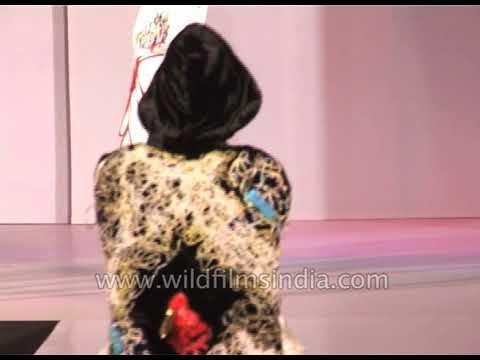
Fashion in India has thousands of years of tradition behind it. India has a rich and varied textile heritage where each region of India has its own native dress and traditional costumes. Fashion Industry is growing at a rapid pace with international developments, such as the India Fashion Week gaining popularity and annual shows by fashion designers held in major cities of India.
India is a country with an ancient clothing design tradition, yet an emerging fashion industry. Though a handful of designers existed prior to the 1980s, the late 80s and the 1990s saw a spurt of growth. This was the result of increasing exposure to global fashion and the economic boom after the economic liberalization of the Indian economy in 1990. The following decades firmly established fashion as an the industry, across India.
History of clothing in India, dates back of ancient times, yet fashion in a new industry, as it was the traditional Indian clothings with regional variations, be it sari, ghagra choli or dhoti, that remained popular till early decades of post-independence India. A common form of the Indian fashion originates from the Western culture. Fashion includes a series of sequins and gold thread to attract customers and apply a statement to the Indian fashion community.
A famous Indian fashion trademark is embroidery, a art of sewing distinct thread patterns. A way to include the traditional look and create a new fashion statement includes embroidery applied to different dresses, skirts, shirts, and pants to reflect the western culture influence as well as include the Indian tradition. As a part of larger revival movement in the Indian textile industry, Ritu Kumar, a Kolkata-based designer and textile print-expert started working on reviving the traditional hand block printing techniques of Bengal, and making it a part of the fashion industry, established “ethnic chic”. She opened her first boutique in Delhi in 1966. In 1973, she first showcased the Zardozi embroidery in his garments, which had its origins in the royal costumes dating back to the Mughal era. This led to the revival of this lost art. In time embroidery became prominent feature of Indian wedding attires, and also one of the biggest fashion exports. This was period of revival, where various organisations, NGOs and indicuals were involved in reviving traditional Indian techniques, in weaving, prining, dyeing or embroidery, including ikat, patola (double-ikat), bandhani (tie & dye) and shisha (mirror embroidery).
Source: Wikipedia
This footage is part of the professionally-shot broadcast stock footage archive of Wilderness Films India Ltd., the largest collection of HD imagery from South Asia. The Wilderness Films India collection comprises of tens of thousands of hours of high quality broadcast imagery, mostly shot on HDCAM 1080i High Definition, HDV and XDCAM. Write to us for licensing this footage on a broadcast format, for use in your production! We are happy to be commissioned to film for you or else provide you with broadcast crewing and production solutions across South Asia. We pride ourselves in bringing the best of India and South Asia to the world… Reach us at wfi @ vsnl.com and admin@wildfilmsindia.com.
source